Rhine Falls Below Shipping Threshold as Low Water Sends Freight Costs Higher
Water levels on the Rhine River have fallen to critically low levels, threatening freight movements along one of Europe's most important commercial waterways and pushing transportation costs higher for fuel and industrial commodities.
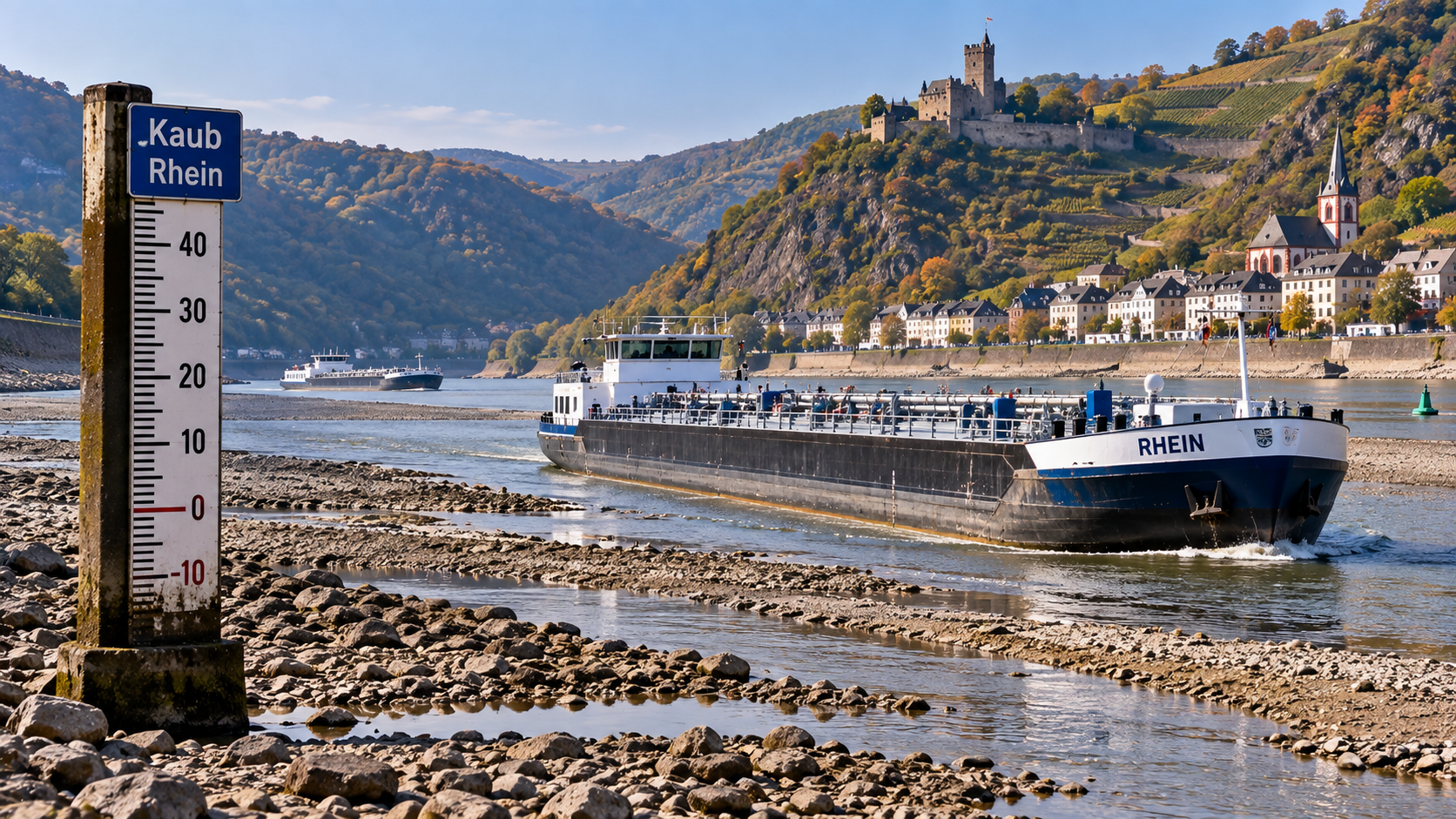
The water gauge at Kaub, a critical reference point for vessels operating on the river, dropped below the key shipping threshold over the weekend. The level reached -3 centimeters on Saturday before recovering to around 2 centimeters on Monday, according to Germany's Federal Waterways and Shipping Administration.
The Kaub gauge is closely watched by shipping companies because it helps determine how much cargo vessels can safely carry. When water levels fall, barges must reduce their cargo loads to avoid grounding, forcing operators to use additional vessels or alternative modes of transport.
Diesel Freight Costs Surge
The impact is already being felt in the energy market.
The cost of transporting diesel from Rotterdam to Karlsruhe increased approximately 15% on Monday. Freight rates on the route have more than doubled since the beginning of September as persistently dry conditions have restricted the amount of cargo that can move on the river.
The Rhine is a major logistics artery connecting the North Sea and Rotterdam with Germany's industrial heartland and other parts of central Europe.
Millions of tonnes of commodities move along the river each year, including petroleum products, coal, chemicals, agricultural goods and other industrial materials.
Industrial Supply Chains Under Pressure
The consequences extend far beyond shipping companies.
Major industrial facilities are located along the Rhine, including chemical plants, refineries and manufacturing operations operated by companies such as BASF, Bayer, Covestro and Shell.
Low water levels can make it more difficult and expensive for these facilities to receive raw materials and energy products while also moving finished goods to customers.
Several chemical producers have already been forced to reduce production or declare force majeure on certain products as prolonged low water levels add another challenge to an industry already dealing with weak demand, elevated energy costs and intense international competition.
Climate Risk Becomes a Logistics Issue
The latest disruption is also raising broader concerns about the reliability of Europe's inland waterways.
Western Europe experienced an exceptionally hot summer, with repeated periods of heat and drought reducing water flows into the Rhine.
Companies along the river are increasingly being forced to consider whether low-water conditions should be treated as a recurring operational risk rather than an occasional weather disruption.
Arne Lohmann Rasmussen, head of research at Global Risk Management, said replacing the Rhine's freight capacity would be extremely difficult. He estimated that approximately 3,000 tanker trucks per day could be required to compensate for the oil cargoes alone.
He described persistent low water as an increasingly important economic and logistical risk for Germany.
More Disruption Possible This Week
The situation could deteriorate again before improving.
Forecasts from Germany's Federal Institute of Hydrology indicate that the Kaub water level could once again fall below the shipping threshold on Tuesday evening.
Dry conditions are expected to continue across parts of the region during the week, although forecasts indicate that river levels could begin recovering in early October.
For inland shipping operators, however, even a short-term recovery may not immediately restore normal capacity. Vessels need sufficient water depth to carry larger cargoes economically, meaning prolonged periods of low water can continue to affect freight availability and prices even after river levels begin to rise.
Rhine Remains Critical to European Trade
The Rhine's latest decline highlights the vulnerability of Europe's industrial supply chain to water conditions.
Unlike ocean-going shipping, inland vessels cannot simply increase capacity when waterways become constrained. Lower drafts mean smaller cargoes per voyage, while alternatives such as road and rail have limited spare capacity and can be significantly more expensive.
As Europe faces a growing number of extreme heat and drought events, the Rhine's reliability is becoming an increasingly important consideration for energy companies, manufacturers, chemical producers and logistics operators.
For now, shippers are watching the Kaub gauge closely as another period of restricted navigation threatens to add further costs to an already pressured European freight market.