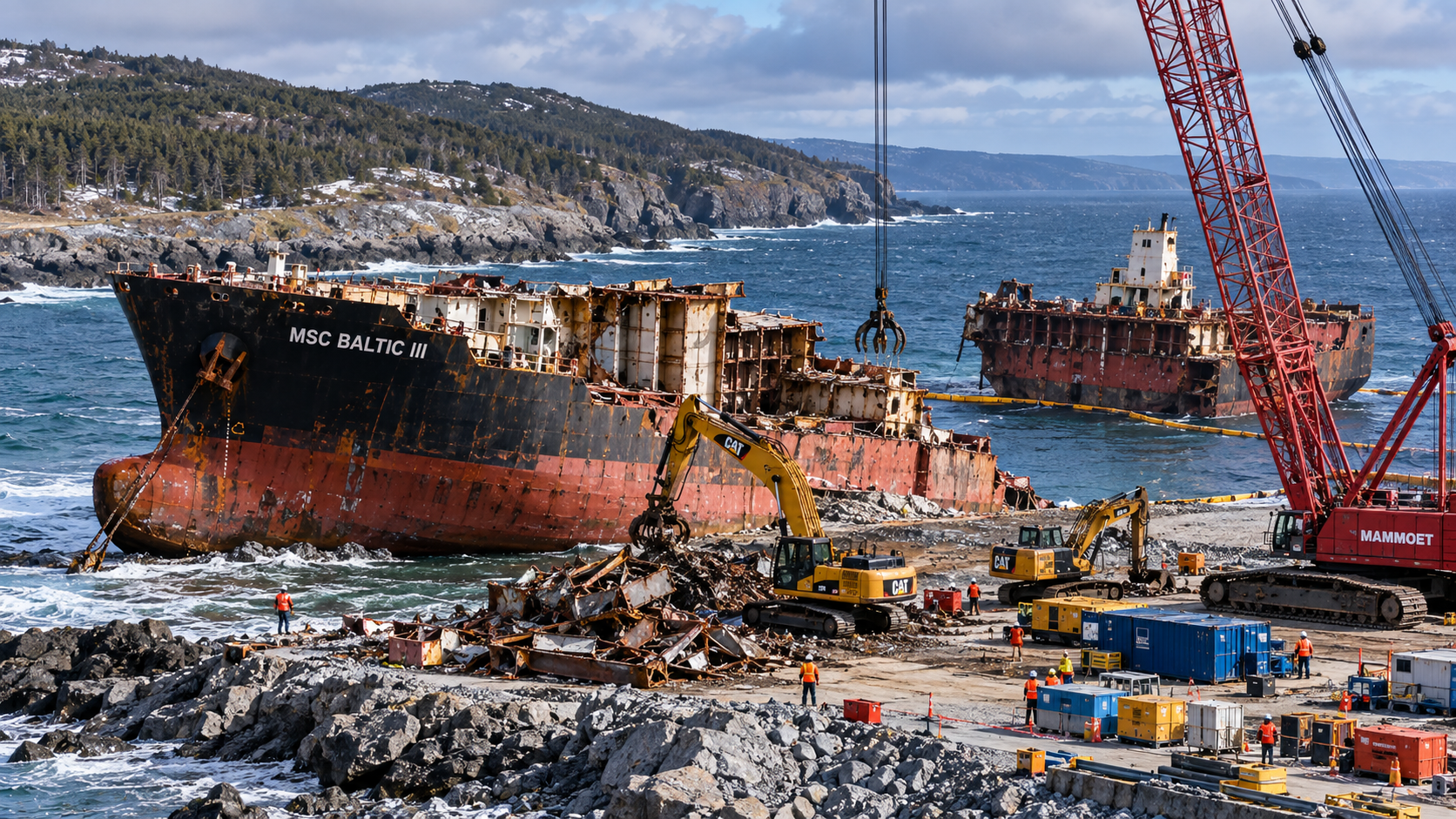
Removal of MSC Baltic III Wreck in Canada Passes the Halfway Mark
The removal of the wrecked MSC Baltic III in Newfoundland has passed the halfway point, marking a significant milestone in one of Canada's most challenging recent shipwreck removal operations.
The Canadian Coast Guard said approximately 6,086 tonnes of material had been removed from the vessel by the beginning of October, representing close to 55% of the ship's total tonnage.
The operation is being carried out by Resolve Marine on behalf of MSC Mediterranean Shipping Company and the vessel's insurers.
Bow and Midship Sections Pulled Ashore
Progress accelerated during the summer as salvage crews dismantled major portions of the ship, including the deckhouse, machinery and upper sections of the hull.
On September 27, the bow and midship sections were pulled another 42 meters (138 feet) toward shore, making more of the wreck accessible from the land-based scrap processing area.
The original vessel measured approximately 207 meters (679 feet) in length and had a deadweight of about 33,767 tonnes.
A large section of the bow had already been removed on September 9 and transferred onto shore. Since then, crews have separated the hull near the area where the ship fractured after grounding.
A large crane positioned on the scrap pad is being used to lift dismantled sections, which are then transported by truck for recycling.
Stern Section Remains Offshore
While substantial portions of the forward and middle sections have now been dismantled, the stern remains in the water.
Salvage crews are preparing the remaining section for the next stage of pulling operations.
The work must be carefully coordinated because the wreck remains exposed to the North Atlantic environment, while winter weather is expected to make marine operations increasingly difficult.
Fuel and Pollution Controls Remain a Priority
Environmental protection continues alongside the physical dismantling of the vessel.
Crews are cleaning the ship's tanks and fuel lines to remove remaining petroleum products and reduce the risk of pollution during further cutting and lifting operations.
The Coast Guard said an absorbent boom remains deployed around the wreck to help contain any potential release.
The original salvage operation also involved removing approximately 1.7 million liters of heavy fuel oil and marine gas oil from the casualty.
A Difficult Grounding
The MSC Baltic III was driven ashore during a severe winter storm on February 15, 2025, after losing power approximately 12 nautical miles offshore.
The vessel subsequently grounded along the Newfoundland shoreline.
The 20-member crew had to be rescued by Canadian authorities in a challenging helicopter operation after the ship was stranded.
The initial phase of the response focused on removing approximately 470 containers, more than half of which were empty, along with fuel and other hazardous materials.
Winter Deadline Approaches
Resolve Marine has previously indicated that it intends to continue the major removal effort for as long as weather conditions permit.
The objective is to remove as much of the wreck as possible before winter conditions make the operation significantly more difficult.
However, the Coast Guard and salvage contractors expect some work to continue into 2027.
Once the major wreck-removal phase is completed, crews will still need to undertake final cleanup and restoration of the affected shoreline.
More Than Halfway, But Work Remains
The removal of more than half of the MSC Baltic III represents a major achievement for the salvage team, but the operation is far from finished.
With the stern still offshore, fuel and tanks requiring continued attention and winter weather approaching, the next phase will be critical.
For the Canadian Coast Guard and Resolve Marine, the priority remains completing as much of the physical removal as possible before winter while preventing further environmental impact along the Newfoundland coast.
The ultimate objective is to leave the shoreline clear of the wreck and restore the area after one of the most demanding ship salvage operations in the region's recent history.